
Representative Purpose for Settling Vs Acceptance: Still from “MRS”
At OMNINSPIRE we strongly believe that the first step towards emotional intelligence is to be able to identify exactly what it is that you are feeling. Most of the time we think that we are angry at someone but if you dig deeper you will realise that you probably are jealous of them. Which is only human! But if you identify that it’s jealousy and not anger, you can manage your emotions and ultimately have a good relationship with that person, which eventually can help you learn from them to be a better version of yourself!
As we grow older we often find ourselves having to make decisions for ourselves. Most of us settle down in fear, few of us think deep enough to accept the reality and very few…extremely very few of us know when to finally say enough is enough and move ahead. Here, we want you to be the better version of your current self. So we have brought you another gem Settling Vs Acceptance in our ever on-going series on ‘VERSUS‘ of emotions.
What is Settling?
Settling means choosing less than what you truly need. Often, it comes from fear, pressure, or low self-worth. People settle to avoid discomfort. Or because they believe they have no other option.
Let’s break it down with real examples.
- Career: You remain in a job you dislike. Every morning feels heavy. The work doesn’t excite you. You stay because the pay is good. Or because change feels risky. You settle for comfort over growth.
- Relationships: You are with someone who doesn’t support your dreams. Maybe they criticize or ignore your feelings. Yet you stay. Why? Because the thought of being alone scares you. You settle for companionship over connection.
- Partners: You want deep emotional intimacy. But your partner avoids tough conversations. You feel distant. Still, you convince yourself, “No one is perfect.” You settle for routine over vulnerability.
- Habits: You stop working out. You eat junk often. You tell yourself, “This is life now.” You let the days pass on autopilot. You settle for survival over self-care.
- Friendships: You have friends who gossip or drain your energy. But you’ve known them for years. So, you avoid confrontation. You settle for history over harmony.
Clearly, settling chips away at your inner voice. Over time, you feel stuck, bitter, and lost.
What is Acceptance?
Acceptance means seeing things as they are. It doesn’t mean liking everything. It means letting go of resistance. And making peace with what you cannot change. Acceptance allows freedom. It doesn’t lower standards. Instead, it aligns you with reality.
Let’s revisit the same examples.
- Career: You know your job isn’t ideal. But it helps pay the bills. You’re also learning new skills. You use this time to plan your next step. You accept where you are, without settling.
- Relationships: Your partner isn’t perfect. But they try. They listen, grow, and love you in their way. You accept their flaws. Not because you fear being alone. But because your core needs are met.
- Partners: You want change. But you also see your partner’s limits. You express your needs clearly. You accept who they are. And decide if that aligns with your vision.
- Habits: You may not work out every day. But you make small efforts. A walk, a healthy meal, a journal entry. You accept where you are, while moving forward.
- Friendships: You accept some friends are not as close now. You release guilt. You invest energy in mutual connections. You grow from awareness, not avoidance.
Acceptance feels like breathing room. It creates peace, not pressure. It helps you choose mindfully.
Settling vs Acceptance: What’s the Real Difference?
Though they may look alike, settling vs acceptance are not the same.
The difference lies in the why and how.
Settling is driven by fear. Acceptance is grounded in clarity.
Settling says, “I have no choice.” Acceptance says, “This is my choice.”
Settling causes resentment. Acceptance brings relief.
Settling is passive. Acceptance is active.
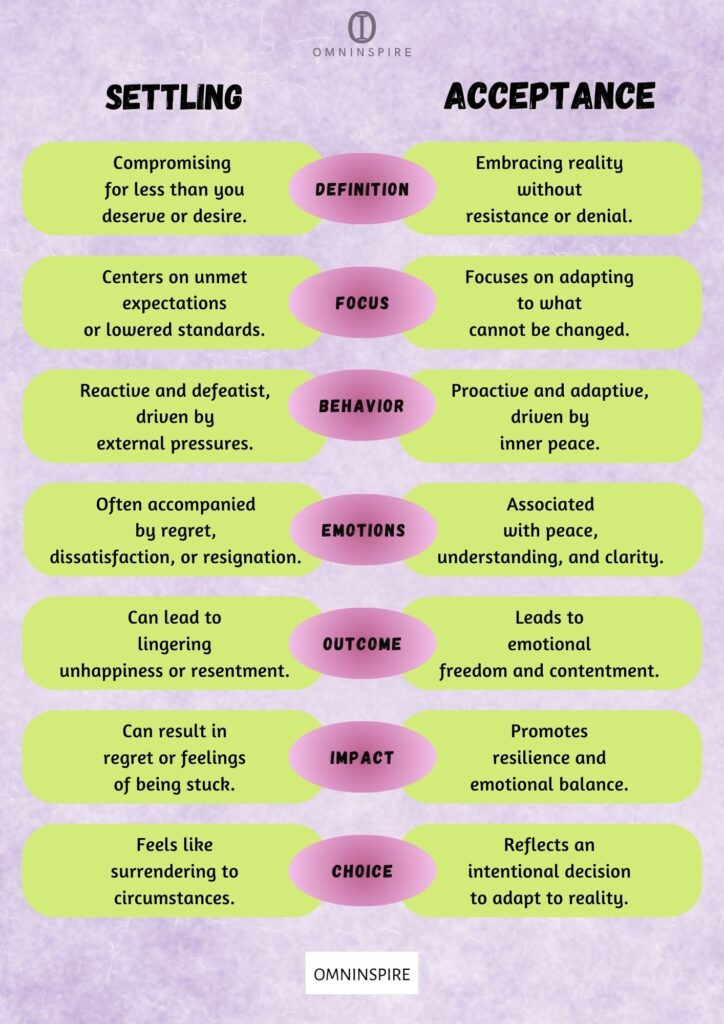
Settling makes you feel drained, stuck, or numb. You make excuses for staying, You avoid your truth.
Acceptance makes you feel calm, present, and aware. You choose to stay with eyes open, You adjust expectations with grace.
How and When to Bring Yourself to Acceptance
Acceptance begins with honesty. First, you must look closely at your life. Ask yourself: Am I here out of choice or fear? Often, we confuse comfort with peace. But settling hides in that fog.
Imagine you are in a job that doesn’t light you up. Instead of pretending you’re fine, you admit: “This is not fulfilling me right now.” Then you explore. Is there space for growth here? Can I use this job to build skills, network, or save money? If yes, you accept the current role as a stepping stone. If not, then it may be time to look elsewhere.
In relationships, acceptance shows up when you know someone’s limitations and choose to stay—not because you fear being alone, but because you see genuine value. Say your partner struggles with expressing emotions, but deeply supports your goals, respects you, and works on communication. You accept the imperfection, without shrinking your needs.
But let’s be clear—acceptance is not submission. If a relationship harms you—emotionally, physically, or mentally—it demands boundaries, not acceptance. Choosing to stay in pain, out of fear or obligation, is settling. There is no emotional wisdom in tolerating abuse.
Now consider friendships. Some people outgrow you, or vice versa. You might crave deeper conversations, while they prefer small talk. Instead of clinging to old roles, acceptance helps you let the connection evolve—or release it entirely. You wish them well, without guilt.
Acceptance also shows up in our personal timelines. Maybe you planned to achieve certain goals by 30, but life took a different turn. Acceptance helps you stop blaming yourself. It helps you shift the narrative from “I failed” to “I grew differently.”
That shift opens doors. You stop measuring life only by milestones. You begin to find meaning in the journey itself. Still, not everything can or should be accepted. If your body is always tired, your mind always anxious, your gut always uneasy—listen. If you feel invisible, dismissed, or constantly explain your worth—that’s a red flag. That’s not your cue to accept. That’s your cue to act.
Acceptance works when your core values remain intact. When your dignity is preserved. When the situation, though imperfect, still honors your truth. If not, the most loving thing you can do is walk away.
So, how do you bring yourself to acceptance?
You begin by pausing. Reflecting. Observing without judging. You ask:
- What am I resisting here?
- Can this change with effort?
- If nothing changes, can I live with it?
- Am I shrinking myself to fit in?
- What would honoring myself look like?
Then you listen—to your body, your emotions, your energy. Acceptance feels lighter. Settling feels like slow erosion. Acceptance isn’t passive. It is a wise action. It creates space to move from truth, not fear. And that’s where real peace begins.
Choose Freedom Over Fear
Settling vs acceptance is a daily question.
In your job, In your love, In your habits, In your friendships.
Ask yourself:
“Am I here because I choose to be? Or because I’m afraid to leave?”
That answer reveals everything.
When you choose acceptance, you choose truth.
When you stop settling, you return to yourself.
And that’s where real life begins.